Friday, July 25, 2014

Tested by Toads and Frogs

I feel sympathetic toward children, with the multitude of tests they have to endure.  Not just those academic standard tests that have been so much in the news in recent years, but also the tests that come in the form of taunts and insults from other children.  Name-calling is the quickest way to insult.  And among the animal epithets one child can lay on another is, "You toad!"  How the toad got into the childhood lexicon is not hard to discern.  After all, what child would want their face to look like a lumpy, bug-eyed, warty animal?

There were other ways that toads were part of the tests of my childhood.  When one child did catch a toad, it could be a challenge to pass it from one pair of cupped hands to another without the toad escaping -- especially when the animal's strange, leathery skin could feel distasteful ("yucky," to use a child's word).

illustration for
"The Frog Prince"
Whether or not toads or their near look-alikes frogs were more prevalent in your childhood would have probably depended upon the dryness or wetness of the habitat that surrounded you.  (The categories "toad" and "frog" almost blend one into the other in the great variety worldwide, especially when tree-toads and tree-frogs are included.)  The similarity of shape and appearance between toads and frogs has meant that both entered folklore and fairy tales as a distasteful test to be overcome.  Would you want to kiss a frog?  Even if it might turn into a prince, thus fulfilling your heart's desires?

The fact that some frogs and most toads do have a toxic, protective liquid in the bulging sacks behind their eyes could make putting one's face too close to the animal a real fear.  People could be wary of approaching toads even if they believed the legend that a toad's body might hold the wondrous toadstone that could grant magical powers.  Shakespeare captured the tension about toads in these lines from As You Like It:
"Sweet are the uses of adversity,
Which, like the toad, ugly and venomous,
Wears yet a precious jewel in his head."

The ways toads and frogs test us extend beyond childhood and even beyond the pages of fiction. Today, the populations of frogs are truly in perilous decline.  Their permeable skins mean that they are early indicators of the spread of our human-made chemicals, especially when compounded by viruses and habitat loss.

When frogs are plentiful, it can also be a challenge for us humans to put up with the loud choruses of frogs finding mates in springtime.  One story from the Christian tradition, however, might inspire us to tolerance.  The story tells how St. Benno, searching outdoors for a place for prayer, was at first tempted to bid the frogs to be silent.  But then, Benno recalled a Bible passage expressing how animals too praise God.  And so, the saint commanded the frogs to "praise God in their accustomed fashion; and soon the air and fields were vehement with their conversation."


~~~

Do you have any childhood memories of toads or frogs?  Adult memories?


(The Shakespeare quote is from As You Like It, II, i.)
(The quote about the St. Benno story is from Beasts and Saints by Helen Waddell, © 1995, p. 66.)

Friday, July 11, 2014

Softening a City's Hard Edge... and Ours

He received the Pulitzer Prize more than once, compiled folk songs, wrote an acclaimed biography of Lincoln, and was a poet. His name is Carl Sandburg. He is pretty much forgotten now. Three of his poems, however, have retained some recognition for their enduring evocativeness, and one of them for its perceptiveness.  And two of those three poems have to do with the healing power of Nature.

In "Chicago," Sandburg portrays that city as it was a century ago. He describes it as a "City of Big Shoulders," but this is not necessarily an attractive bulked-up city.  Along with references to gunmen, whores, and hunger, the poet says to the city, "They tell me you are wicked and I believe them...."  The only way Sandburg is able to defend this city is to admire its brashness as being "the stormy, husky, brawling laughter of Youth."

A quite different atmosphere is evoked by the very brief poem "Fog."  In the center line of this poem, a city is again referred to, with the simple phrase "harbor and city."  But there is no roughness experienced this time.  That is because that line of the poem -- and the city itself -- become surrounded by softening fog.  That gift from Nature is so quiet and gentle that it "comes on little cat feet."

A third poem (and one with greater depth of thought than the other two) is Sandburg's "Grass." Here, the healing power of Nature is made explicit.  It is a power that can not only soften visibly the sharp edges of a city but also heal human grief.  Published in 1918, the opening lines of "Grass" mention cities that were the sites of large battles in the just-ended World War I, in the Civil War, and in the Napoleonic Wars.  The poet knows what was the shared consequence of all those wars, because before each place-name, the instructions are given:
"Pile the bodies high....
Shovel them under...."
However, there is also that element of Nature -- the element not created by those human hands that made war.  That other element speaks:
"... let me work --
I am the grass; I cover all."
The poem predicts that in ten years, when the train passes by, the passengers will no longer be able to recognize the spot, because the grass will have done its healing work, covering all.

From our vantage point today, we know that the brash, adolescent Chicago of Sandburg's 1914 poem "Chicago" did not grow into a model of beauty.  About a half-century later, it had become devastated by the legacy of racism, white flight, massive decaying ghettos, and riots after the assassination of Martin Luther King, Jr.  Nevertheless, in recent years, a new generation of city leadership has led the way in the creation of rooftop gardens on the top of city hall and downtown buildings.  Those people apparently knew -- as did the poet Carl Sandburg almost a century before -- that plants can have a healing touch for body and soul.

~~~

Have you experienced a way that Nature eases a city or human roughness?


(Sandburg's poems can be found in various anthologies.  I took them from
 The Harper American Literature,  ed. Donald McQuade, et al.  © 1987.
  You can read them on-line at Selected Poems of Carl Sandburg [1926].)

Friday, June 27, 2014

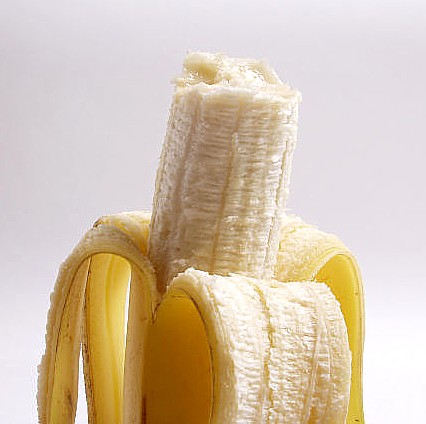
Bananas: It’s Not All Elementary

Most people know of Charles Darwin's voyage on the Beagle, and of the scientific discovery that was it's outcome.  Few people, however, know how that journey was the result of parental care and concession.  Charles's father first objected to Charles's joining the voyage, but soon gave in, even paying his son's way.  Two sentences in a letter of the father to his son on the journey caught my eye.  From England, the father reported to his son some thousands of miles to the south, "I got a Banana tree.  I sit under it and think of you in similar shade."  It might seem an unusual topic, but knowing, as I did, how Charles was not especially close to his father, I heard in those lines an expression of the father's love for his son by means of sharing news on a topic that would interest the young Charles -- Nature.

Exotic in England and the U.S. in Darwin's day, imported bananas are now common in the U.S., and are an easy means for parental care.  Being soft and sweet, a banana can be more appealing to a small child than an apple or an orange might be.

I got a kick out of seeing some banana trees when, as a child, my family moved to the South, but I was disappointed to find that its variety of fruit was not the kind we bought in stores. Grocery-store bananas, despite being now so commonplace, are nonetheless oddities of Nature.  Just to start with, a banana "tree"  is not actually a tree.  The definition of "tree" is usually a plant with a woody stem, but a banana plant's stem is instead formed out of the stems of leaves, and made strong by the pressure of water.  (A banana plant is really in a way a giant herb, being in the same group of plants that produce cardamom, ginger, and turmeric.)

A second thing that makes the matter of bananas not so elementary is that the banana fruit we eat is sterile and seedless.  The sterility is caused by cultivated banana plants having three sets of chromosomes.  That violates the normal course for sexual beings, by which a species is usually perpetuated by each parent contributing one set of chromosomes, the offspring having two sets, and thus being fertile.  Long before the word "cloning" captivated our popular imagination, banana growers had figured out how to, in a sense, "clone" new banana plants from the suckers of an old plant.

The seemingly simple banana is thus an example of the long story of humans' lives being intertwined with the lives of domesticated plants.  Although we in the U.S. encounter banana plants mostly through their fruit, in other countries, the banana plant's leaves are used in a variety of ways, from making a plate for a meal to creating shingles for a thatched hut.

That parent lovingly feeding her small child bright bananas probably has no idea that she is also introducing her child to a word that will eventually allow the child to expand its vocabulary in multiple ways.  That child, besides learning the simple, rhythmic word "banana," might in time graduate to "banana split," "banana seat," and "banana republic."  Not to mention the colorful exclamation that a person "has gone bananas!"

~~~

In what way is food you share or eat along with others a way of caring?


(The quotation from Charles Darwin's father's letter is
 dated 7 March 1833, and is No. 201 in the on-line Darwin Correspondence Project.)

Friday, June 13, 2014

Seeing More than Seashells on the Seashore

The ones I see in the natural world are rarely as beautiful as the ones I see in photographs in books.  Seashells, that is.  Almost invariably, the shells shown in books' photographs are shiny, smooth, whole, and brightly colored; whereas the shells I find on beaches are often worn, dulled, or even chipped.  Of course, that can be part of the fun in collecting shells -- the challenge of finding one that is nearly perfect.

The story of our human fascination with shells, however, has involved more than merely collecting shells. Seashells have become a part of human culture in both tangible and intangible ways. In some tropical locations, because numerous, small, almost identical shells can be found, they have been turned into such things as currency or necklace beads.  Even when fewer shells or only less spectacular ones can be found, they can still be turned into a child's art project.

Our intangible relationships with shells are less obvious, but more intriguing -- in particular, the way that shells have become vehicles for reflecting about who we are in the world.  The modern classic in this regard was Anne Morrow Lindbergh's 1955 book Gift from the Sea.  In that little, beautifully written book, Anne Lindbergh primarily used the outward shapes of different shells as metaphors for aspects of her own life.  Different shell-shapes become springboards as she reflected upon the question, "What is the shape of my life?"  Her book, reprinted in numerous editions, has been an inspiration to many, especially those who have felt the burdens and restrictions of society's not allowing equal roles for women.

However, as I look at and think about seashells, I would like to think of them as more than a physical shape that can be an analogy for some contour of my life.  I want to keep in mind that those shells have been part of the body of living creatures -- creatures who have had interests and endeavors of their own, sometimes endeavors quite different than mine.  Although I am interested in relationships between those shells on the beach and my own life, it is not so much a metaphorical relationship as it is the actual relationship between our human lives here on land and the lives of creatures in the ocean.  (In this way, I am influenced by a later generation of nature writers who have been affected by the modern environmental movement and by the science of ecology.)  A snail-like spiraling shell might be a special object of beauty to me, but to the animal who lived in it, that spiral was just a side product of the way it added to its shell as its body grew.

Therefore, as I study those shells and look at pictures of them in books, I also look at the diagrams of the strange bodies that once lived within those shells.  I do not see anything we might think of as a "normal" animal shape in the strange body, but I can recognize the diagram's words labeling parts such as "Mouth" and "Intestine." And, in some cases, even "eye."  As I read those labels, I am forced into remembering that in this shell was once a living, breathing being!  Maybe my delight in thinking about all those other beings can be for me a different kind of gift from the sea.

~~~

Have you ever picked up or gathered shells on a beach?  What made it enjoyable?


(The brief line by Lindbergh is from Chap. 2 of
Gift from the Sea by Anne Morrow Lindbergh, © 1955.
  Twenty years after its 1955 publication, Lindbergh wrote an afterword,
 looking back at the book, which can be found in many editions.)

Friday, May 30, 2014

Turning Our Brains to Birds

In the book To Kill a Mockingbird (adapted into a movie). Atticus Finch tells his children that they are allowed to shoot some birds with their air-rifles, but that "it's a sin to kill a mockingbird."  That directive resembles many laws in the U.S. when it was a rural society. Shooting birds such as crows in defense of one's crops was allowed, but killing "songbirds" (such as the versatile, melodious mockingbird) was prohibited.

Fortunately, birds have not been so discriminatory toward the human race.  They have blessed us in many ways, whether or not their calls have been labeled "songs" by us.

Alfred Hitchcock's movie The Birds (based on the Daphne du Maurier book) is an unforgettable movie in which birds attack humans for undetermined reasons.  The trailer for the movie, instead of showing frightening clips from the film, presented Hitchcock himself drolly giving a mock lecture about the history of the bird-human relationship.   As he speaks, Hitchcock casually picks up a quill pen, letting the viewer make the connection to our use of birds.  He then escalates from picking up a hat with a feather to picking up a hat with an entire stuffed bird decorating it.  Finally, he sits down at a dining table with an entire roasted chicken before him.  Throughout the trailer, his "lecture" feigns a naive innocence, wondering why birds, would ever be unappreciative of us humans.

A Pheasant and
a Bird Called Tabut
(1717  C.E.)
I was once given an insight into how critical birds have been for some cultures.  I found myself in a conversation with a group of people comparing their families' plans for the upcoming Thanksgiving.  Most people were opting for turkey, but a few had in the past sometimes eaten chicken instead.  One person then asked a member of the group who had been silent -- an immigrant from Haiti -- what kind of birds his family had eaten in Haiti.  His unhesitating and quite earnest reply was, "Any kind we could catch."  His reply revealed how, for some people living in poverty, birds have been life-savers.

Today, in highly technological societies, almost all the birds we eat are domesticated animals (which we distinguish by calling them "fowl" or "poultry.")  We virtually never see them when they are alive, even as the protein from their bodies gives life to our own bodies.

Despite that disconnect, there might be a way that the living birds singing all around us can add more life to our spirits.  That way is captured by Lisel Mueller in her poem "Why I Need the Birds."  Mueller imagines birds with their songs as traveling ahead of her throughout the day as they follow the arc of the sun.  Part of the poem reads:
"... the birds, leading
their own discreet lives
of hunger and watchfulness,
are with me all the way...."

~~~

Do you ever hear the songs of birds during the course of your day?  When?


(The photograph of the manuscript is used under a Creative Commons license,
Attribution-Share Alike 3.0 Unported, by the Walters Art Museum.)
(Mueller's complete poem can be read on-line at this external link:  "Why I Need the Birds".)